10–20 years of use under real-life conditions
100% material recyclability at the end of the product’s life

50–100% longer lifespan of woven synthetic turf

Direct support from the manufacturer of woven turf

 Why woven sports turf is the best choice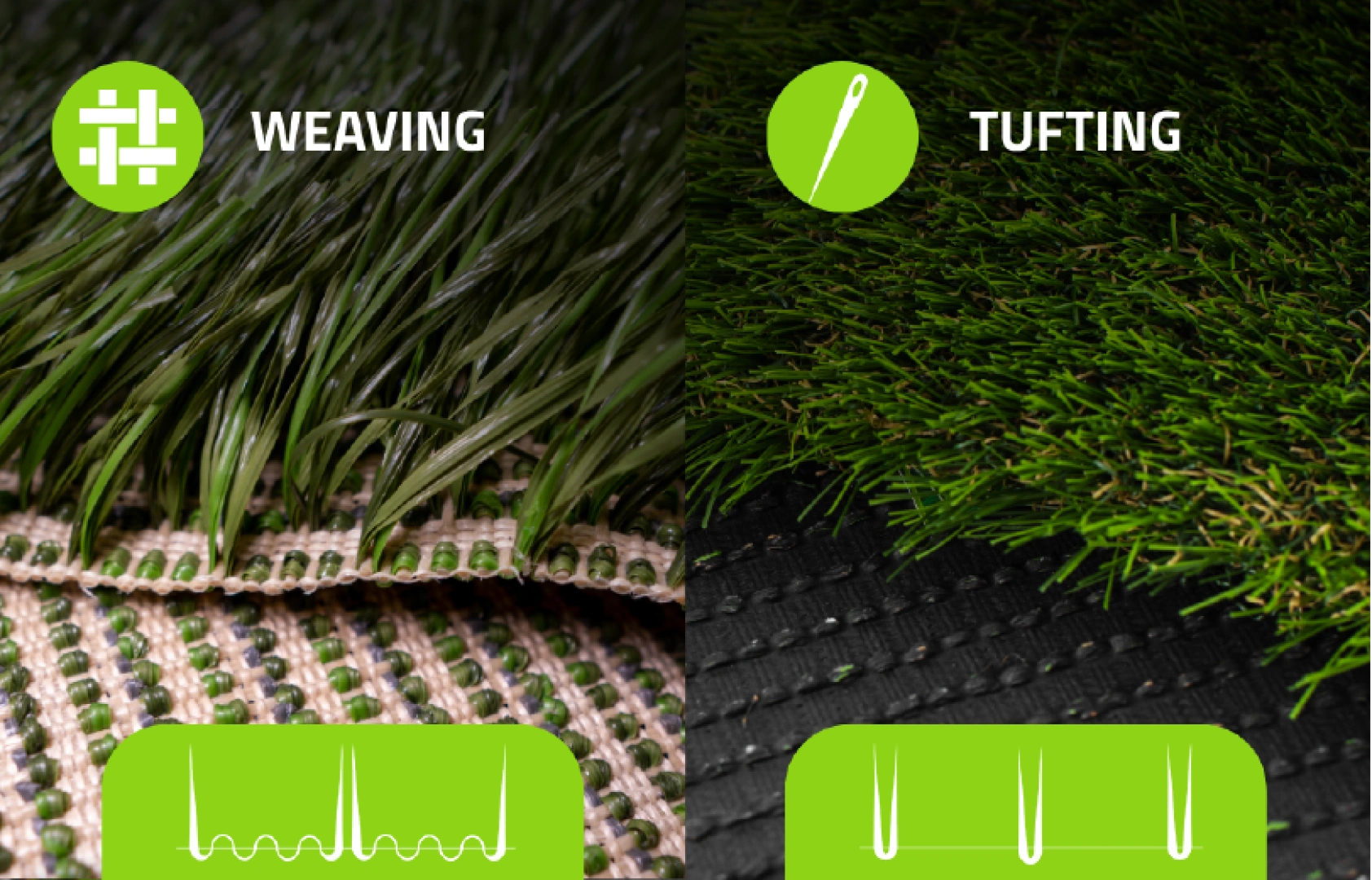
Dywilan – 140 years of tradition and a pioneer of woven sports turf technologyDywilan is a sports turf manufacturer based in Łódź with over 140 years of weaving heritage. We were the first in the world to develop a woven sports grass system – Wovengrass – combining textile know-how with innovation in sports technology. Our synthetic turf systems operate in various climate zones — from school fields to professional stadiums. Wovengrass extends pitch durability, improves playing comfort, and allows the surface to be 100% recyclable.
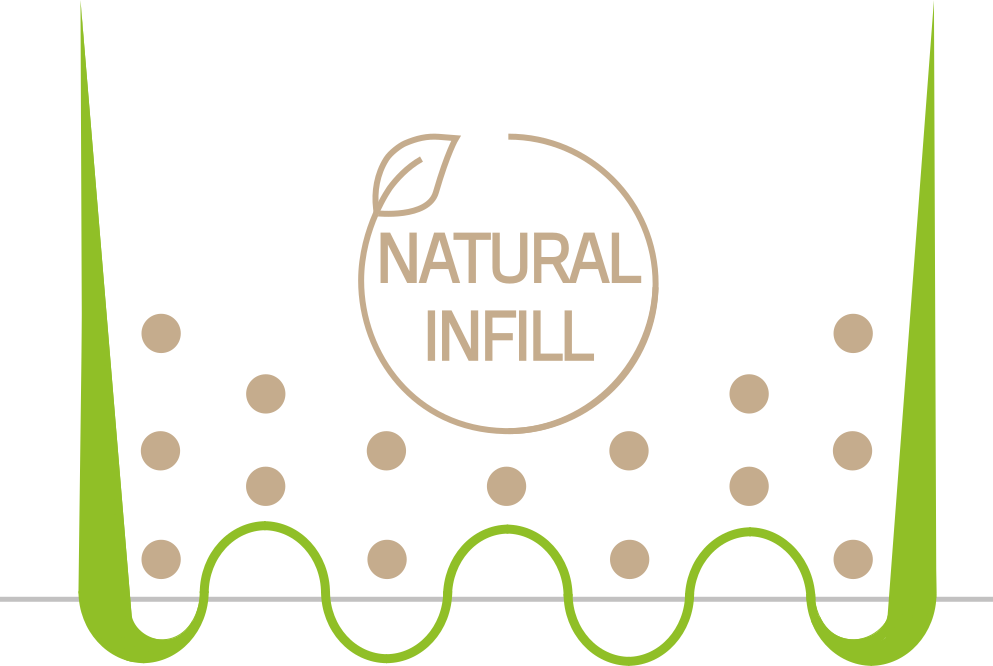
ProjectsDiscover how Wovengrass weaving technology performs in real-world conditions. Our projects include pitches that combine modern design, durability and sustainability — from non-infill and hybrid systems to turf with natural cork infill. Each project proves that woven sports turf truly changes the standard of play.
End-use of Dywilan Wovengrass artificial sports turfOur woven synthetic surfaces perform well in many sports disciplines and facilities — from professional stadiums to school fields and gyms. With Dywilan Wovengrass technology, every artificial turf pitch gains durability, a natural appearance and year-round usability.

 Techblog
The Wovengrass Techblog is a knowledge hub for investors, architects and contractors interested in modern sports surfaces. We publish analyses, system comparisons and practical guidelines for designing and maintaining synthetic and hybrid turf pitches.
New EU regulations on microplastics are revolutionizing the sports surfacing market. Investors and facility managers are actively seeking alternatives to traditional rubber granules. Is a Wovengrass system with natural cork the ultimate solution? Discover why woven technology represents the future of sports infrastructure.
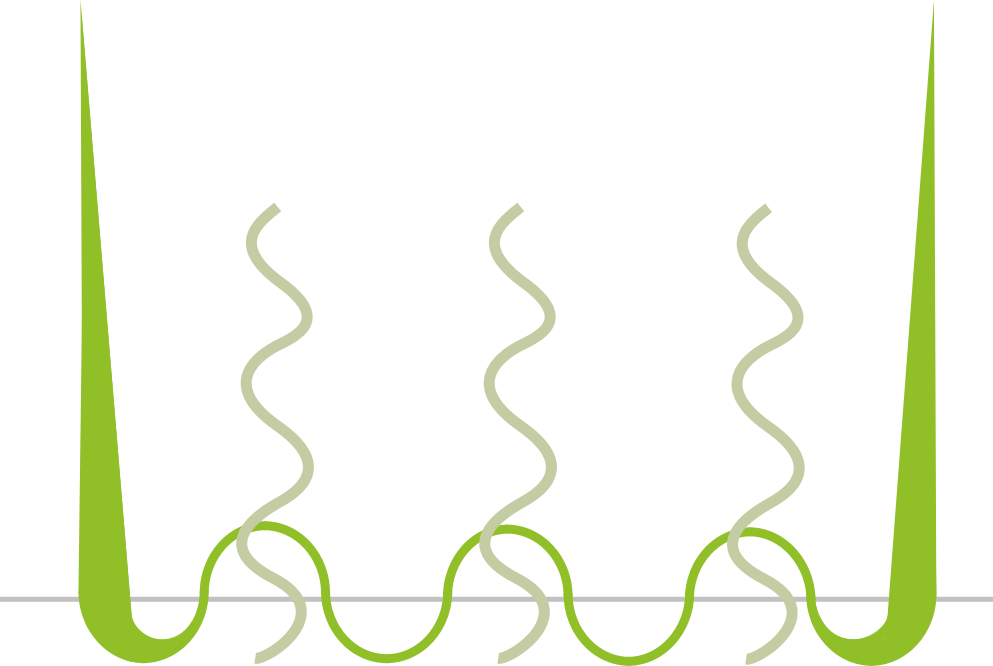
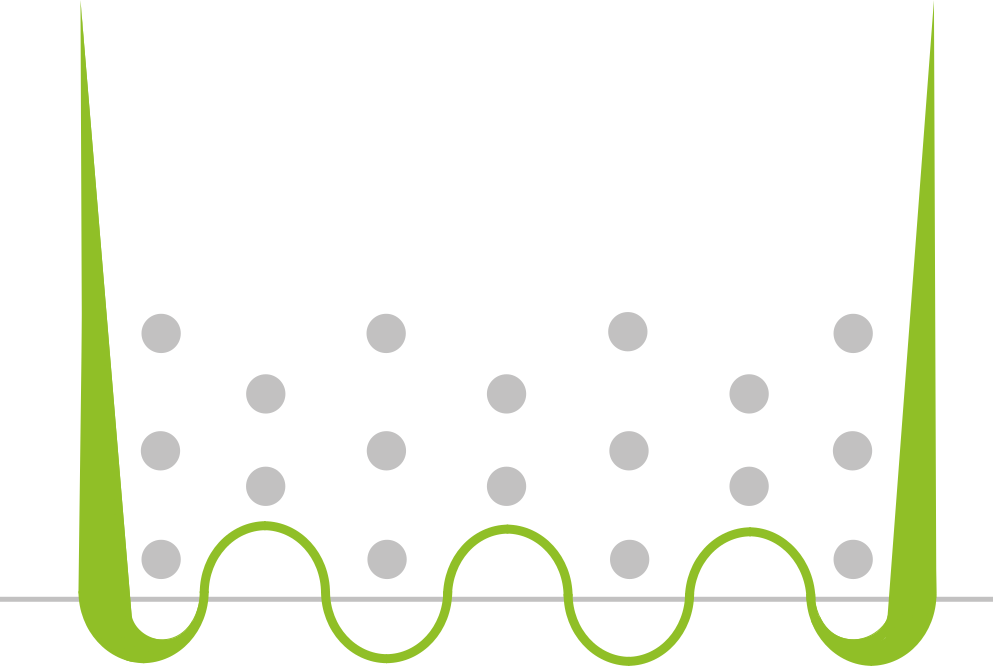
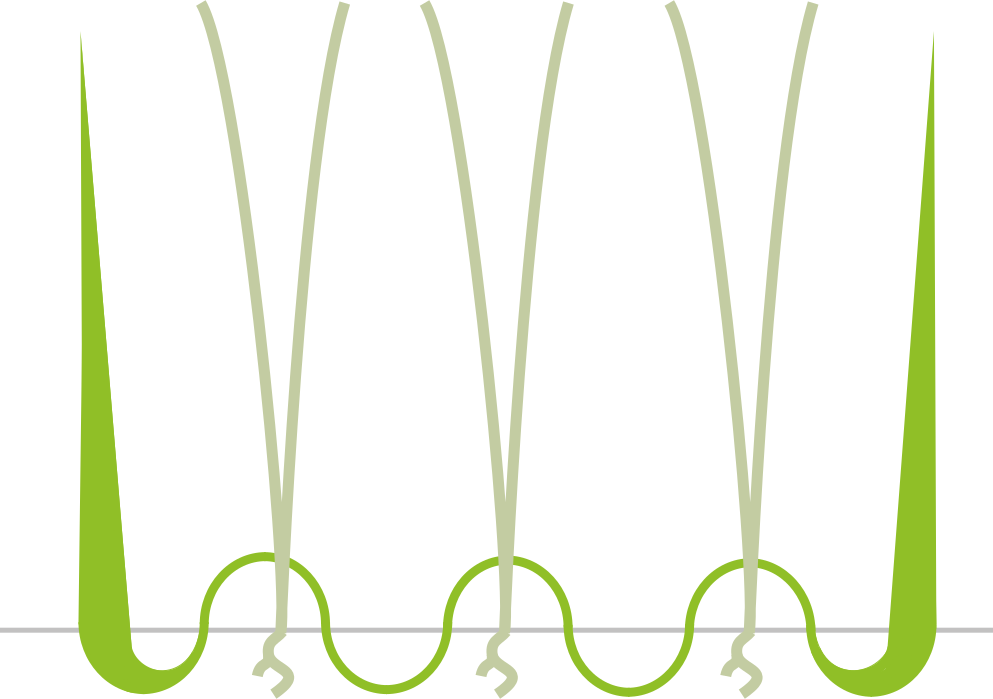
Since 2011, DYWILAN from Łódź has been the first company in the world to produce technologically advanced woven turf. Thanks to its advantages over the widely used tufted turf (needle-punched production method), it addresses many of the cost and environmental challenges faced by municipalities and sports clubs.
Beyond measurable benefits, woven products guarantee enhanced user comfort and a unique, natural appearance.
Artificial surfaces are increasingly becoming an alternative to natural grass on sports fields—not only football and training pitches, but also multi-purpose surfaces. This ever-green solution is now used on tennis courts, golf courses, and even playgrounds.
Why has it become so popular? Is it safe for the environment? Is it truly an ecological option?
Purchasing artificial turf for a sports field is a significant investment. This article was created to simplify your decision-making process. We believe that after reading it, you will be able to make a more informed choice and select a surface that perfectly matches your needs, offering the right balance between quality, functionality and price.
The “My Pitch – Orlik 2012” program, under which over 2,500 small football and multi-sport fields with artificial turf were built in Poland, is now over 10 years old.
This initiative marked the beginning of a new approach to promoting physical activity and sports among children and youth. It also significantly contributed to the development of sports infrastructure and the widespread adoption of artificial turf in Poland.
What have we learned over the past decade?
Artificial turf is increasingly replacing natural grass on sports fields. There are many reasons for this trend: durability, greater functionality, and easier, less costly maintenance. In this article, we will focus on the last advantage.
What does proper artificial turf maintenance look like? It is true that maintaining natural grass is much more time-consuming and expensive than caring for synthetic surfaces, but that does not mean artificial turf is “maintenance-free”.
